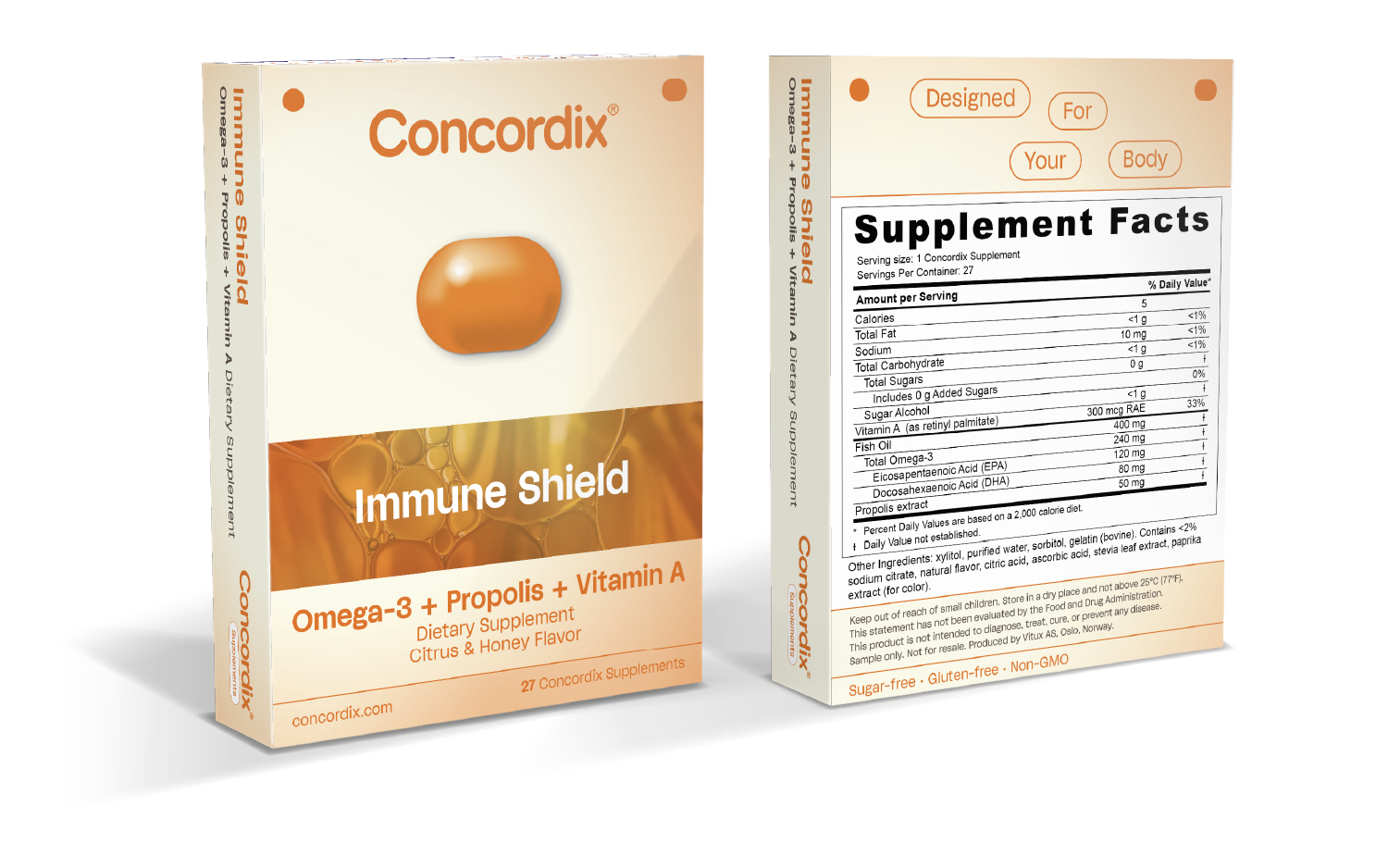
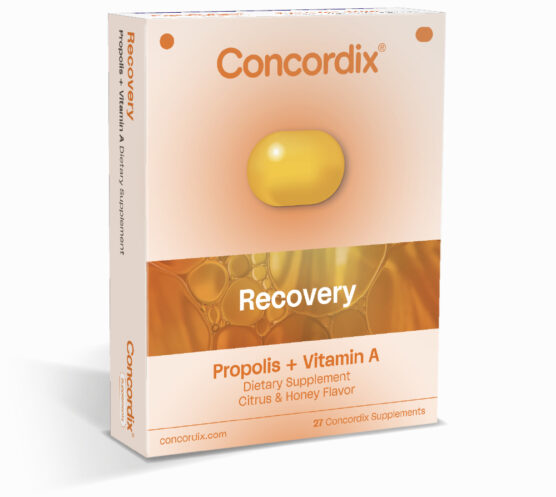
Immune Shield

Omega-3 + Propolis + Vitamin A
Citrus & Honey Flavor

Support Everyday Resilience

Immune Shield combines omega-3s, propolis, and vitamin A in a smooth, honey-citrus chew, providing families with convenient, science-driven daily support for the body’s natural defenses. This premium, easy-to-take chew is designed for consistent nutrient delivery, enhanced sensory appeal, and reliable daily compliance.

Supplement facts

  • Omega-3 240 mg
  • EPA 120 mg
  • DHA 80 mg
  • Propolis 50 mg
  • Vitamin A 300 mcg-RE

• Serving Size: 1 Concordix Supplement
• Flavor: Citrus & Honey
• Color: Orange
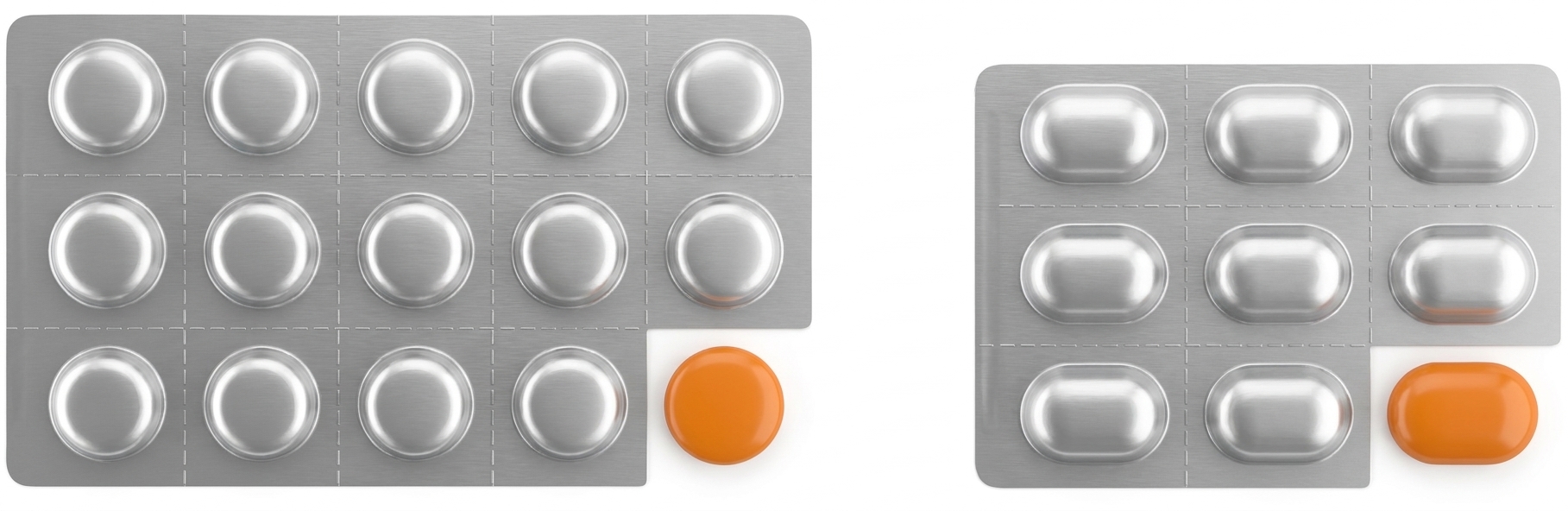
• Packaging: Individually sealed in aluminum blister packs; carton from recycled materials available

Targeted Nutrient Support for Immune Health

Omega-3s support normal immune cell function, contribute to cardiovascular health, and promote overall resilience.
Propolis is rich in polyphenols and flavonoids, offering antioxidant support and helping maintain the body’s natural defense systems.
Vitamin A contributes to the maintenance of normal immune function and supports epithelial barrier integrity.

Concordix® Superior Absorption Technology

The patented Concordix® chewable emulsion delivers omega-3s in billions of microscopic oil droplets, supporting consistent and enhanced nutrient absorption—up to 44.9% greater than standard softgels. This design also allows for the combination of oil- and water-soluble nutrients in a single convenient chew. Individually sealed blister packaging protects nutrients from oxygen, moisture, and light, helping maintain potency, taste, and stability throughout shelf life.

Why Consumer Brands Choose Concordix® Immune Shield

• Convenient chewable format designed for daily use, sensory enjoyment, and consumer compliance
Enhanced omega-3 absorption through patented Concordix® emulsion technology
Convenient, individually sealed servings for freshness, reliable dosing, and nutrient stability
Clinically-supported blend of immune boosting nutrients
Sugar-free with colors and flavors from natural sources for a clean-label, family-friendly product

Deliver Everyday Defense

Immune Shield pairs essential nutrients with Concordix® technology for reliable, science-driven support of natural defenses. For brands, this premium formulation offers an easy-to-market solution that meets consumer demand for effective, enjoyable, and science-backed immune support all year long.


These statements have not been evaluated by the Food and Drug Administration. This product is not intended to diagnose, treat, cure, or prevent any disease.


Omega-3

Omega-3 fatty acids are essential polyunsaturated fatty acids (PUFA). These PUFAs can not be synthesized by the human body but has many health benefits. The health effects have been extensively documented and probably the most known effect of omega-3 PUFAs is to reduce the risk for cardiovascular diseases. There are also indications that omega-3 PUFAs may lower the risk for dementia and mitigate depression.

The most important omega-3 PUFAs in the human diet are:
1. Alpha-linolenic acid (ALA)
2. Eicosapentaenoic acid (EPA)
3. Docosahexaenoic acid (DHA)

ALA is found in plants, including chia, flaxseed, hemp, and nuts. Plants contain of fibers that are difficult to digest for humans and can reduce absorption of essential bioactives. Some studies indicate that ALA has neuroprotective, anti-inflammatory, and antidepressant properties. The human body contains enzymes that convert ALA into DHA and EPA, however, the conversion rates are often very low with ranges between 1% to 20%.

High concentrations of EPA and DHA are found in fish and shellfish. EPA and DHA in fish oil are easily absorbed by the human body. It is known that these PUFAs have different effects.
For instance, EPA is metabolized to eicosanoids that regulate fundamental physiological processes such as cell division and growth, blood clotting, muscle activity, and the secretion of digestive juices and hormones. Eicosanoids derived from EPA may reduce certain inflammatory processes that can lead to heart attacks and strokes.
DHA is not involved in eicosanoid formation but is highly concentrated in the brain and involved in normal neurological development and functioning. Next to that, DHA is an important part of the retina and plays a role in visual development and normal eye function.
View all ingredients

EPA

Omega-3 fatty acids are essential polyunsaturated fatty acids (PUFA). These PUFAs can not be synthesized by the human body but has many health benefits. The health effects have been extensively documented and probably the most known effect of omega-3 PUFAs is to reduce the risk for cardiovascular diseases. There are also indications that omega-3 PUFAs may lower the risk for dementia and mitigate depression.

The most important omega-3 PUFAs in the human diet are:
1. Alpha-linolenic acid (ALA)
2. Eicosapentaenoic acid (EPA)
3. Docosahexaenoic acid (DHA)

High concentrations of EPA and DHA are found in fish and shellfish. EPA and DHA in fish oil are easily absorbed by the human body. It is known that these PUFAs have different effects.

For instance, EPA is metabolized to eicosanoids that regulate fundamental physiological processes such as cell division and growth, blood clotting, muscle activity, and the secretion of digestive juices and hormones. Eicosanoids derived from EPA may reduce certain inflammatory processes that can lead to heart attacks and strokes.

View all ingredients

DHA

Omega-3 fatty acids are essential polyunsaturated fatty acids (PUFA). These PUFAs can not be synthesized by the human body but has many health benefits. The health effects have been extensively documented and probably the most known effect of omega-3 PUFAs is to reduce the risk for cardiovascular diseases. There are also indications that omega-3 PUFAs may lower the risk for dementia and mitigate depression.

The most important omega-3 PUFAs in the human diet are:
1. Alpha-linolenic acid (ALA)
2. Eicosapentaenoic acid (EPA)
3. Docosahexaenoic acid (DHA)

DHA is not involved in eicosanoid formation but is highly concentrated in the brain and involved in normal neurological development and functioning. Next to that, DHA is an important part of the retina and plays a role in visual development and normal eye function.
View all ingredients

Propolis

Propolis is a resinous material that bees use to seal small cracks and gaps in the hive (beeswax seals the larger gaps). It’s made when bees collect resin from trees and other sources and mix it with a little bit of honey. Propolis has been found to offer numerous health benefits, and research is carried out to evaluate its role for various therapeutic uses.

In ancient cultures, propolis was often used for abscesses and minor wounds. Bees, in an effort to close gaps in hives, use propolis as a precautionary measure to keep out dangerous microbes and fungi. Recent findings have confirmed its potent action against many harmful pathogens and more research has established its enormous healing benefits.

Researchers have shown that propolis may offer powerful antibiotic properties. The isolated acids from propolis have been shown to be an effective agent against many bacteria. In addition, there has been some evidence that propolis supports the immune system and reduces the risk for infections.

View all ingredients

Vitamin A

Vitamin A is an essential fat-soluble bioactive, also known as retinol. There are 2 forms of vitamin A available in the diet: preformed and provitamin A. Preformed vitamin A comes from animal sources, with high concentrations in fish oils, eggs and milk. Provitamin A comes from plant sources and is mainly found in the form as carotenoids with the most important one: beta-carotene. The body converts these provitamin carotenoids into vitamin A.

Both preformed vitamin A and provitamin A must be metabolized intracellularly to retinal and retinoic acid, the active forms of vitamin A, to support the vitamin’s important biological function. Vitamin A plays a key role in several bodily functions including:

Vision

Vitamin A is critical for vision as an essential component of rhodopsin, a protein that absorbs light in the retinal receptors. Vitamin A maintains vision because it continuously forms new rhodopsin. Retinoic acid, is a substitute of vitamin A and supports the conjunctival membranes and cornea.

Growth and development

Vitamin A is involved in genetic regulation of cell formation and differentiation and intercellular communication. It is critical during the (neurological) development of the foetus.

Immune system

Vitamin A also supports the immune system and helps to protect against infections and invading antigens.

Skin and mucous membranes

The skin is a mechanical immune barrier, and sufficient concentrations of vitamin A available, maintain skin health.

The European Food Safety Authority (EFSA) has acknowledged the following beneficial effects of preformed vitamin A and provitamin A as a basis for health claims:
• Normal cell differentiation
• Normal function of the immune system
• Maintenance of normal skin and mucous membranes
• Maintenance of normal vision
• Normal metabolism of iron

View all ingredients

Other products in this range