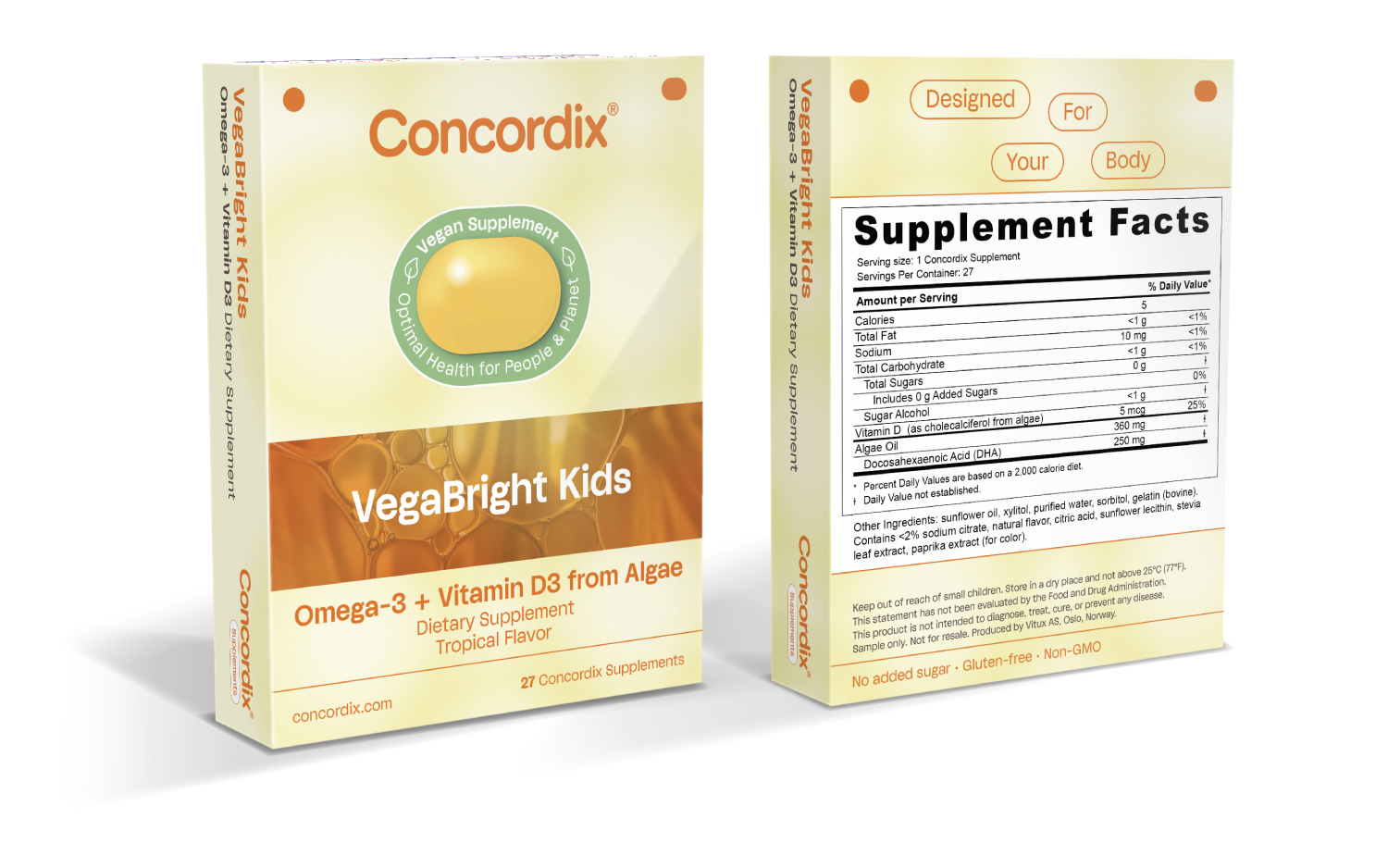
VegaBright Kids

Omega-3 + Vitamin D3 | Tropical Flavor

Nourishing Daily Support for Kids

VegaBright Kids blends essential omega-3 fatty acids and vitamin D3 into a fun, flavorful chew, carefully formulated to support children’s normal growth, development, and overall wellness. Each serving delivers docosahexaenoic acid (DHA) to contribute to the normal development and function of the brain, eyes, and nervous system. Vitamin D3 supports the maintenance of normal bones and teeth, and helps maintain immune function, providing essential nutrients for everyday health.

Supplement facts

  • Omega-3 250 mg
  • DHA 250 mg
  • Vitamin D3 5 mcg

• Serving Size: 1 Concordix® Supplement
• Flavor: Tropical (other flavors available)
• Color: Yellow
• Packaging: Individually sealed in aluminum blister packs; recycled carton option


Key Nutrients for Children

• DHA (Docosahexaenoic acid): Supports the development of brain and retinal tissue, aiding learning, memory, and visual development.
• Vitamin D3: Contributes to normal bone and teeth maintenance and supports healthy immune function.

Innovative Chewable Format

• Chewable emulsion technology: Citrus-derived pectin matrix stabilizes water- and oil-soluble nutrients in a single vegan chew.
• Single daily dose: Combines all essential child-supporting nutrients in one chew for convenient use.
• Sensorial experience: Vibrant flavor, appealing color, and enjoyable texture enhance daily supplementation.

Why Choose Concordix®

• Patented technology ensures reliable nutrient stability in every chew.
• Only sustainable, certified sources are used for pure, clean DHA nutrition.
• Kid-pleasing flavors, soft texture, and zero fishy aftertaste.
• No added sugar or preservatives.

Reliable Nutrition Kids Stick With

VegaBright Kids transforms daily nutrition into a consistent, easy routine. DHA and vitamin D3 work together to support normal brain, vision, bone, and immune development, delivering reliable benefits children need and parents can trust.


These statements have not been evaluated by the Food and Drug Administration. This product is not intended to diagnose, treat, cure, or prevent any disease.

Omega-3

Omega-3 fatty acids are essential polyunsaturated fatty acids (PUFA). These PUFAs can not be synthesized by the human body but has many health benefits. The health effects have been extensively documented and probably the most known effect of omega-3 PUFAs is to reduce the risk for cardiovascular diseases. There are also indications that omega-3 PUFAs may lower the risk for dementia and mitigate depression.

The most important omega-3 PUFAs in the human diet are:
1. Alpha-linolenic acid (ALA)
2. Eicosapentaenoic acid (EPA)
3. Docosahexaenoic acid (DHA)

ALA is found in plants, including chia, flaxseed, hemp, and nuts. Plants contain of fibers that are difficult to digest for humans and can reduce absorption of essential bioactives. Some studies indicate that ALA has neuroprotective, anti-inflammatory, and antidepressant properties. The human body contains enzymes that convert ALA into DHA and EPA, however, the conversion rates are often very low with ranges between 1% to 20%.

High concentrations of EPA and DHA are found in fish and shellfish. EPA and DHA in fish oil are easily absorbed by the human body. It is known that these PUFAs have different effects.
For instance, EPA is metabolized to eicosanoids that regulate fundamental physiological processes such as cell division and growth, blood clotting, muscle activity, and the secretion of digestive juices and hormones. Eicosanoids derived from EPA may reduce certain inflammatory processes that can lead to heart attacks and strokes.
DHA is not involved in eicosanoid formation but is highly concentrated in the brain and involved in normal neurological development and functioning. Next to that, DHA is an important part of the retina and plays a role in visual development and normal eye function.

View all ingredients

DHA

Omega-3 fatty acids are essential polyunsaturated fatty acids (PUFA). These PUFAs can not be synthesized by the human body but has many health benefits. The health effects have been extensively documented and probably the most known effect of omega-3 PUFAs is to reduce the risk for cardiovascular diseases. There are also indications that omega-3 PUFAs may lower the risk for dementia and mitigate depression.

The most important omega-3 PUFAs in the human diet are:
1. Alpha-linolenic acid (ALA)
2. Eicosapentaenoic acid (EPA)
3. Docosahexaenoic acid (DHA)

DHA is not involved in eicosanoid formation but is highly concentrated in the brain and involved in normal neurological development and functioning. Next to that, DHA is an important part of the retina and plays a role in visual development and normal eye function.

View all ingredients

Vitamin D

Vitamin D is a fat-soluble vitamin that is naturally present in very few foods such as fish. When the skin is exposed to the sun, the human body is able to synthesize vitamin D from ultraviolet rays. It is involved in many different biological processes including, bone health, immune system and cell division.

Bone health

Vitamin D plays a key role in promoting calcium absorption in the intestine and maintaining adequate blood calcium and phosphate concentrations to enable normal bone mineralization. In this way, vitamin D is important for the proper functioning of the skeleton, and may prevent that bones to become brittle as in osteoporosis.

Other effects

Vitamin D has beneficial effects on muscle function and strength. The vitamin is also involved in cell growth, neuromuscular and immune function and reduction of inflammation. There is accumulating epidemiologic data that a low vitamin D status is inversely associated with disorders such as diabetes, rheumatoid arthritis and multiple sclerosis.
The European Food Safety Authority (EFSA) has acknowledged the following beneficial effects as a basis for health claims:
• Vitamin D contributes to the maintenance of normal muscle function
• Vitamin D contributes to the normal function of the immune system and healthy inflammatory response
• Vitamin D contributes to the normal absorption/utilisation of calcium and phosphorus and maintenance of normal blood calcium concentrations
• Vitamin D contributes to the normal cell division
• Vitamin D contributes to the maintenance of normal bones
• Vitamin D contributes to the maintenance of normal teeth

View all ingredients

Other products in this range